
Why Design-Build Is Gaining Ground in FEDERAL Construction
By: John Robbins and Alex Nowik
Design-build is a collaborative delivery method that brings the owner, architect/engineer, and contractor together under a single contract. By reintegrating design and construction into one coordinated team, design-build allows projects to advance with shared accountability, clearer communication, and earlier alignment around scope, cost, and schedule.
While design-build may feel like a newer approach in today’s federal market, it is not a new concept. Many projects completed prior to the last century were delivered by integrated designer-builder teams. In contrast, most North American projects over the past 100 years have followed a traditional design-bid-build approach. According to the Design-Build Institute of America (DBIA), design-build is projected to account for nearly half of total U.S. construction spending over the next several years, reflecting its continued adoption across public and private sectors.

What Project Teams are Experiencing
Earlier Contractor Involvement
Early involvement of the construction team provides ongoing constructability and budgetary guidance throughout the development of the design. Designers can test ideas within real cost and schedule constraints, improving the overall quality of the design while reducing late-stage revisions.
Construction team members also benefit from this approach. By participating in design decisions from the outset, teams spend less time getting up to speed during pricing and early construction, allowing work to progress more efficiently once the project moves forward.
Greater Emphasis on Collaboration During Preconstruction
Design-build delivery places a strong emphasis on collaboration during preconstruction. Design and field teams work together to resolve conflicts early, often using coordination tools such as Autodesk Navisworks to identify clashes and develop real-time solutions. This approach reduces delays associated with design revisions and supports continuous project progression as construction begins.
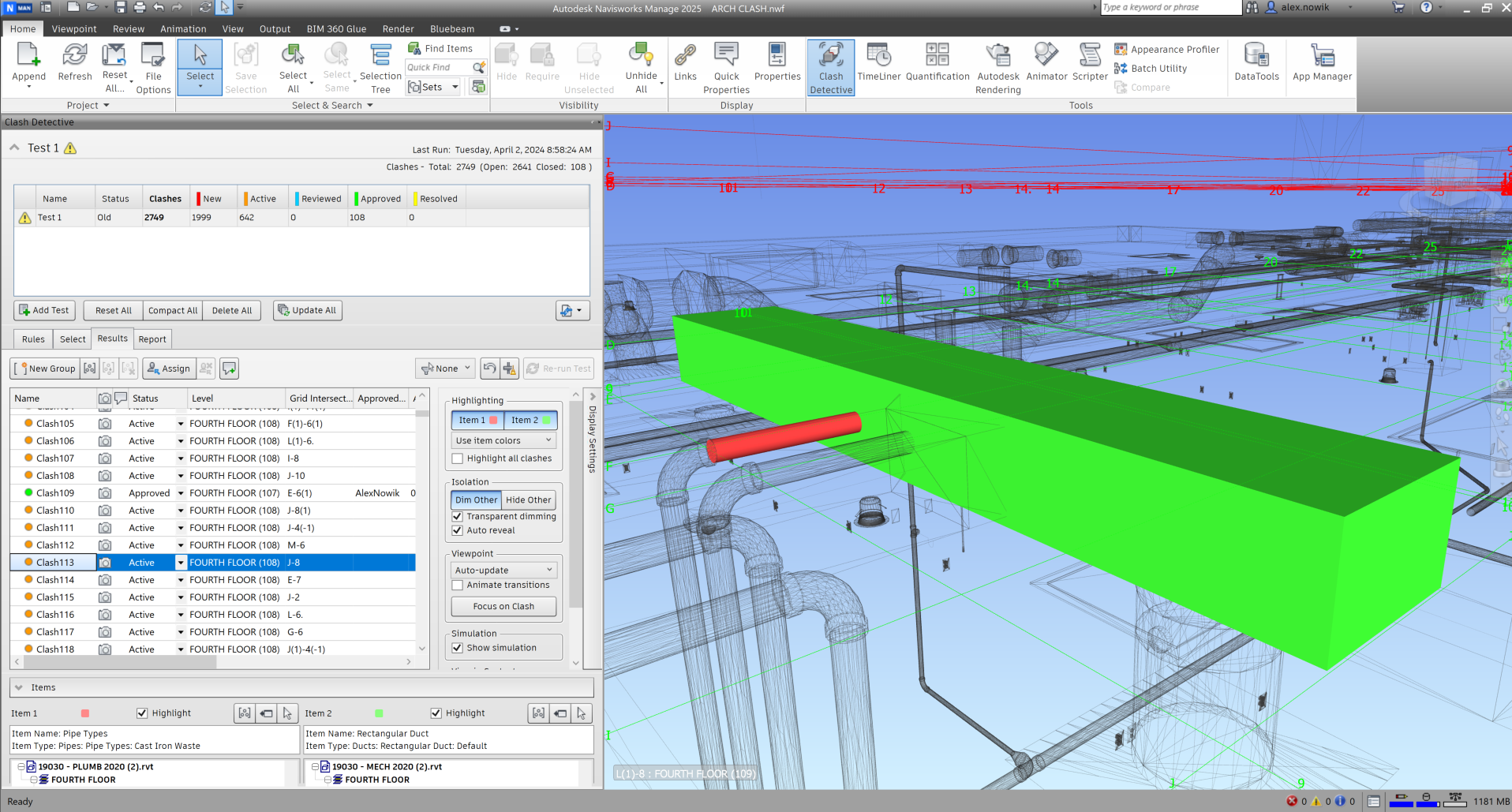
Clash coordination study developed in Autodesk Navisworks, utilizing BIM to identify and resolve system conflicts during preconstruction.
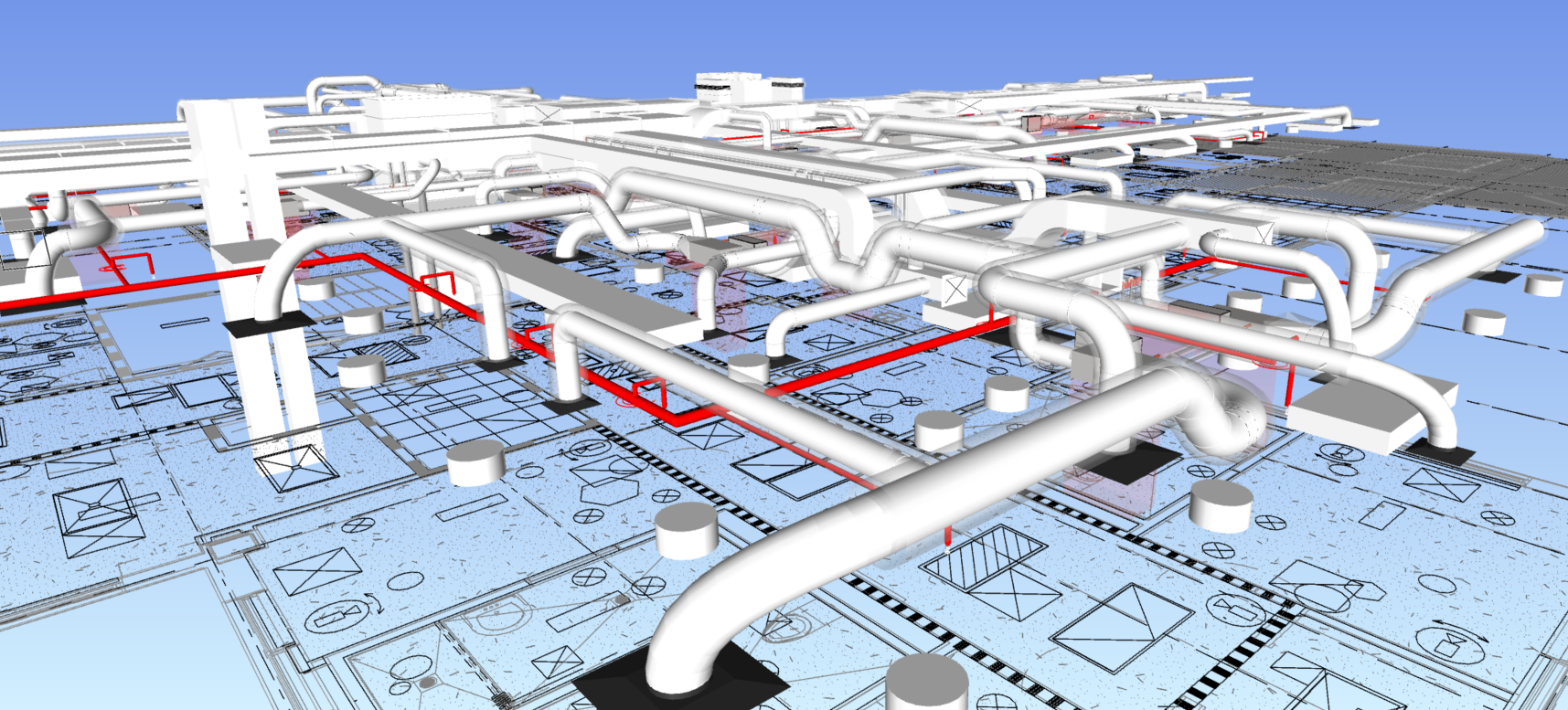
Combined coordination model developed using Autodesk Revit and Navisworks, showing integrated Building Information Modeling (BIM) coordination across MEPF trades during preconstruction.
Advantages of Design-Build Delivery
When executed effectively, design-build offers several advantages that align well with the needs of public owners and project teams.
Design-build encourages trust, collaboration, and teamwork by aligning all parties around shared goals from the beginning of the project. Communication improves as designers and builders work as a single team, creating space for innovation and problem-solving that can be more difficult to achieve in traditional delivery models.
From a performance standpoint, design-build can lead to:
Improved quality of the final product
Greater flexibility as design and construction advance together
More effective risk control and liability reduction
Stronger cost and budget transparency
Fewer change orders and reduced material waste
Potential cost savings and increased efficiency
Faster overall project delivery
For federal projects in particular, design-build still provides the benefit of a clearly defined maximum price based on a mutually developed scope that satisfies project requirements. Formalized government submittals, reviews, and oversight processes remain in place throughout delivery, ensuring transparency and accountability.
When Design-Build Works — and When It Doesn’t
Despite its benefits, design-build is not the right fit for every project.
Some owners believe that traditional design-bid-build delivery provides greater competition on price. Others point to design time being included in the overall period of performance, or to the need for construction teams to engage and incur costs earlier in the process.
Successful design-build delivery also requires:
Trust across the full project lifecycle
Active owner participation
Transparency among all team members
Where Design-Build Is Most Effective
Design-build works best when project scope can be clearly defined early and when speed and coordination are priorities.
Federal design-build projects may be delivered as one-phase or two-phase procurements. One-phase design-build involves a single solicitation in which teams submit qualifications, technical proposals, and pricing at the same time, often used for smaller or less complex projects. Two-phase design-build includes an initial qualifications phase followed by a detailed technical and price proposal, making it well suited for large, complex, or higher-risk projects.
Even in design-build delivery, public owners retain full decision-making authority based on project needs.
When Another Approach May Be Better
Design-build may be less effective when project requirements remain highly fluid or when additional programming and scope definition are required. In these cases, preliminary design services or a phased design-build approach can help clarify requirements before full construction authorization.
What Project Teams Must Be Ready For
Strong preconstruction processes, clear internal alignment between design and construction, and ongoing transparency are essential for successful design-build delivery. While team member roles remain defined, collaboration is continuous, risks are shared, and cost controls are openly managed across the entire team.
Looking Ahead
Design-build will remain an important option within the public sector’s delivery toolbox. This delivery method can be applied across a wide range of project types — from buildings to infrastructure, and from simple scopes to highly complex programs.
The most successful design-build projects involve partners who understand both the delivery method and the mission, and who share values that support a successful outcome for the public they serve.
ABOUT THE AUTHORS

John Robbins, Senior Design Manager
John brings over 30 years of experience in architecture and design-build delivery to Richard, supporting complex federal and institutional projects. He works closely with project teams during preconstruction to improve coordination, address constructability challenges early, and help align design decisions with cost, schedule, and project requirements.

Alex Nowik, Assistant Design Manager I
Alex is an Assistant Design Manager with a strong foundation in BIM coordination and problem-solving, contributing to smoother preconstruction workflows and conflict resolution across design-build initiatives. His curiosity and determination to find solutions early in the delivery process help project teams deliver coordinated, constructible outcomes.